|

CASARABONELA -
MAIN
Monuments
JARDÍN BOTÁNICO DE CACTUS Y
PLANDAS SUCULENTAS
-
VOLVER
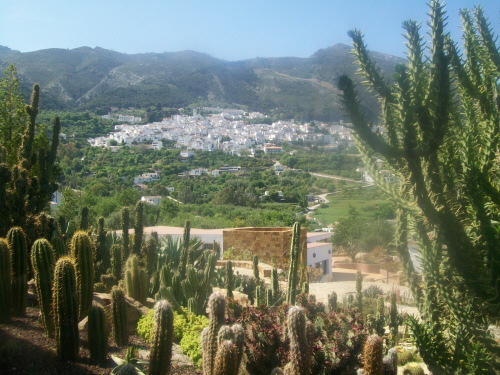
Se trata de
de la colección de cactus y
plantas suculentas más
importante de Europa. Contiene
unas 2.500 especies distintas de
plantas pertenecientes a
diversas familias botánicas
adaptadas a vivir en lugares
áridos de zonas tropicales y
subtropicales de todo el mundo.
Las áreas geográficas mejor
representadas son el sur de
África y Madagascar y los
desiertos del sur de Estados
Unidos y México. No obstante,
también encontramos numerosos
ejemplares de Sudamérica (Perú,
Ecuador, Brasil, Chile y
Argentina fundamentalmente),
África tropical, Península
Arábiga, India, Australia y, por
supuesto, Europa y la Región
Mediterránea. También hay un
espacio especialmente dedicado a
las Islas Canarias.
.JPG)
Este
Jardín-Botánico se compone de
cuatro espacios bien definidos:
-
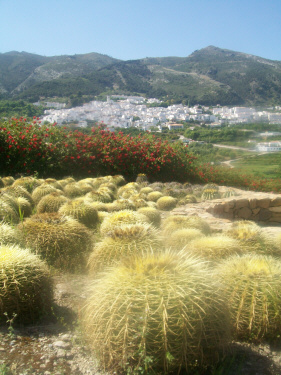
El jardín
exterior en el que, de una
forma ante todo ornamental y
paisajística, se pretende
hacer descubrir al visitante
las grandes posibilidades y
ventajas del uso en
jardinería de las plantas
xerófitas en general, y de
las plantas suculentas en
particular.
-
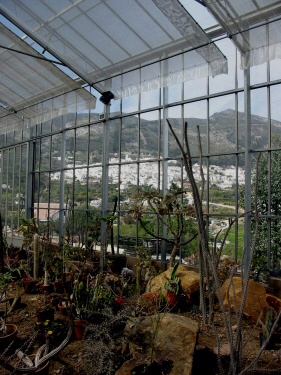
La
colección ubicada en los
invernaderos acristalados de
última generación, donde se
reparten los diversos
géneros y especies según sus
zonas geográficas de origen.
En estas instalaciones
conviven tanto plantas
procedentes de climas
tropicales áridos, con
requerimientos más
estrictos, como otras para
las cuales los invernaderos
hace la función de estación
de aclimatación.
-
El Centro
de Información y
Acercamiento a la Cultura de
la Sierra de las Nieves
(CIAC); con una zona de
información y atención al
visitante donde se ofrece
información completa y
detallada de todos los
recursos que conforman la
Reserva de la Biosfera de la
Sierra de las Nieves así
como otro espacio donde se
pueden adquirir desde
productos de artesanía y
agroalimentaria de la
comarca a souvenirs
relacionados con los cactus
y plantas suculentas.
-
Otras
instalaciones como la
Oficina Municipal de
Turismo, departamento
científico, salón de actos,
biblioteca, sala de
reuniones y un excelente
servicio de cafetería y
restaurante donde degustar
una destacada variedad de
aperitivos y platos a la
carta.
De esta
forma, y en un espacio cómodo,
el visitante tiene la
posibilidad de hacer un
recorrido por diferentes
continentes y países,
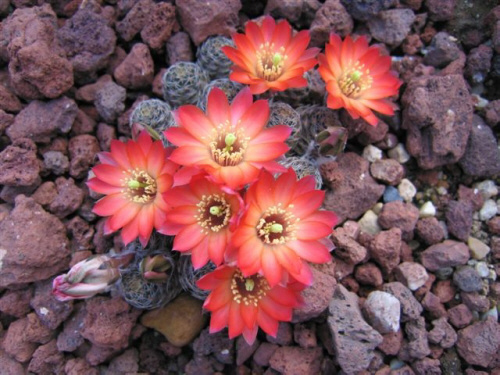
descubriendo la variabilidad
morfológica de estas plantas,
desde cactus gigantes hasta las
humildes “plantas piedra” o
Lithops y adquirir una visión
amplia y cautivadora del
fascinante mundo de las plantas
suculentas a nivel mundial.
Por otro
lado, se quiere que el museo sea
un lugar de referencia para
expertos en estas plantas,
realizando conferencias y ciclos
de gran nivel científico
contando a tal efecto el museo
con una sala de conferencias.
Además hay que indicar que en el
complejo también hay un
laboratorio para mantener la
investigación y la vida de las
propias plantas ya que algunas
de ellas hay que polinizarlas de
forma artificial.
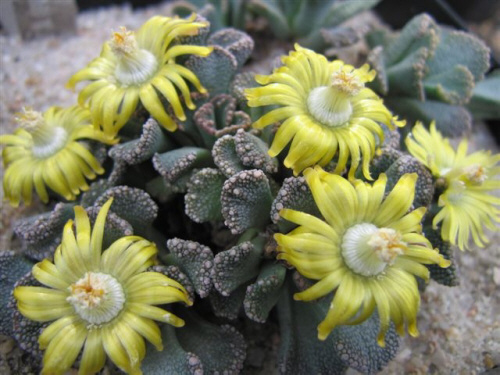
Este proyecto
supone un antes y después para
la oferta turística de este
municipio de la Sierra de las
Nieves que contará con el más
destacado reclamo turístico de
su historia gozando del mayor
Museo y Jardín Botánico de estas
características en Europa lo
cual atraerá a miles de
visitantes y entusiastas
botánicos de todos los países
del continente ya que cualquier
época del año es buena para
visitar el jardín, pues las
distintas especies florecen de
manera sucesiva a lo largo de
todo el año.
Más información
en:
www.cactuscasarabonela.uma.es
Más información
en:
www.cactuscasarabonela.es
Church of
Santiago Apóstol
-
UP
The parish church of Santiago Apostol (St.
James de Apostle) is the town’s most
relevant monument. This ancient collegiate
church built primitively in gothic style on
the site of a 15th Century mosque has
undergone numerous modifications over the
years. This temple rises up above the
highest part of the town, near the ruins of
the Moorish castle. It is made up of three
aisles separated by rounded arches on ten
quadrangular pillars; the central nave,
which has lost its original framework with
V-beams, is taller than it was at the
beginning and is covered with half-barrel
vaults with lunettes and traverse ribs over
the line of impost; the side aisles with
much lower vaulted ceiling, also reinforced
with traverse ribs, hide the sloping roof.
The entrance to the Sagrario chapel is found
in the Epistle aisle.
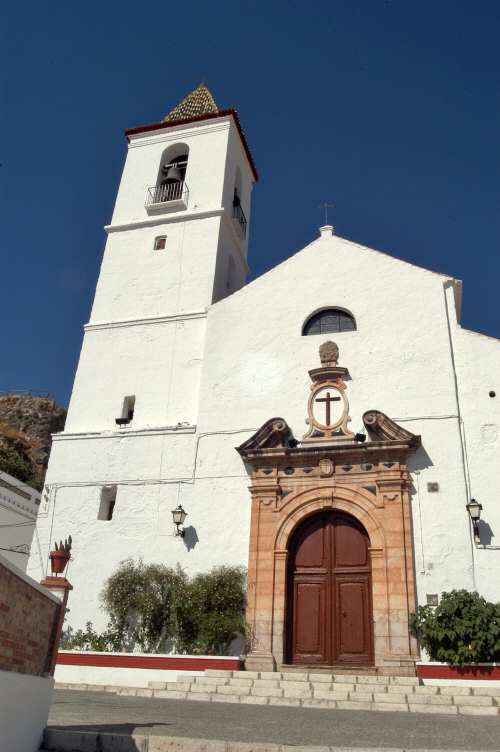
On the exterior, the base of the portal is a
combination of pink and black marble. It has
a rounded arch between twisted Tuscan
pillars that support the entablature; the
pediment is split and rolled in the centre
there is an oval that holds a cross.
The tower has four square sections separated
by imposts, finishing in a pyramid-shaped
roof of glazed tiles.
Inside the church, the choir situated in the
main chapel and the Sagrario chapel are the
elements that most stand out. The chapel
that houses the main altar has an image of
the Virgen del Rosario (Virgin of the
Rosary) (polychrome wood from the 18th
Century). Outside, the doorway is formed by
a rounded arch, entablature and an open
pediment in side scrolls that point towards
a framed oval and the cross of Santiago. The
tower rises impressively above the rest of
the building, with the last of its three
sections having elongated spans and rounded
arches and a pyramid-shaped tiled roof.
Mizos mill
-
UP
The existence of a natural water course is
the origin of this ancient mill complex,
dedicated to the production of flour and
oil. Although several of these existed
during the Islamic period, it wasn’t until
the 16th Century, coinciding with the
arrival of repopulating Christians, that
their number rose considerably, reaching 21
in the middle of the 19th Century (11 flour
mills and 10 oil mills, all powered by
water, according to what has been recorded
in Pascual Madoz’s description of
Casarabonela).
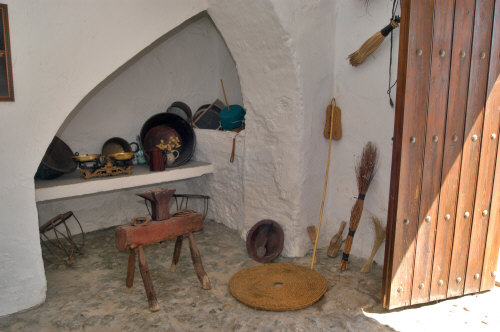
The country folk would bring their loads of
olives on mules and donkeys. They were
assigned a number for the milling order and
a tank for depositing the olives while they
waited their turn. The miller charged a
fixed amount per ground kilo (the contract
price), this often being the motive for
lawsuits and disagreements between the
millers, the town councillors and the
villagers.
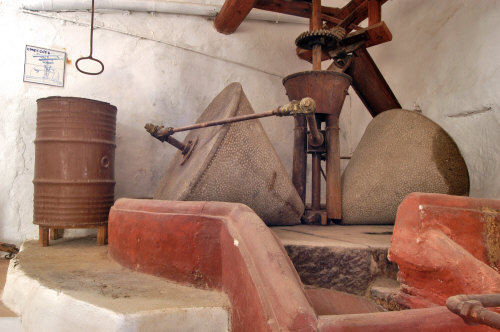
For the grinding of the olive they first
used animal traction (“the blood mills”).
The olives were ground and the mass obtained
was then pressed and arranged into wicker
baskets (“rondeles”), forming the cargo of
the press. There are different types of
press but here they used the beam method,
already used in the Roman period. With the
industrial revolution in the 19th Century,
mechanical iron presses, using levers,
wheels and other similar systems, began to
be introduced into the mills; but it was the
hydraulic press, making for a larger, faster
pressing, without effort, that converted
this mill into a factory.
Brief
historical summary
For centuries, the
Mediterranean world has
considered the olive to be
sacred. The Greeks believed
that Athena, the goddess of
knowledge, gave man the
olive thereby winning a
competition between the Gods
for the most useful gift.
The Middle Eastern country
folk began extracting oil
from wild olives 7000 years
ago and began cultivating
them 1000 years later. The
Phoenician travellers
extended their cultivation
to Greece and Spain, and the
Greeks introduced the
process to Italy. Today, 74%
of olive oil worldwide comes
from these three countries.
Points of interest
The best olive oil is the
“virgin extra”, without
chemical additives and not
mixed with other oils, the
product of cold pressing,
without the use of heating.
It has less than 1% acidity
and complies with a set of
strict rules regarding its
taste and aroma.
It has been used for food,
for fuel, as an ointment,
(the word “Christ” means
“the anointed”) and as a
sacrament.
It contains no cholesterol
and this is why the
Mediterranean people have a
very low rate of coronary
illnesses.
Andalusia produces almost
90% of Spain’s olive oil and
in the future, Spain will
provide half of the world’s
olive oil.
In the Arabic countries oil
is used for consumption and
also as a hair tonic. In
India they put it in their
hair but do not consume it.
A professional taster can
distinguish between a
hundred different flavours,
from straw to apple,
artichoke to wood, and from
almond to flowers.
9th Century
Arabic Castle
-
UP
Very little of the Castle has survived, in
fact, only several towers and a few sections
of wall. The Qasr Bunayra castle – possibly
of Roman origin – was an important focal
point in the Umar ibn Hafsum revolt,
becoming an operations base against Bobastro
in 922. During the Nazarid period it was an
important bastion in the border war. The
Spanish took it over permanently on the 2nd
of June, 1485, and it was used as a military
fortress until the 18th Century.
.jpg)
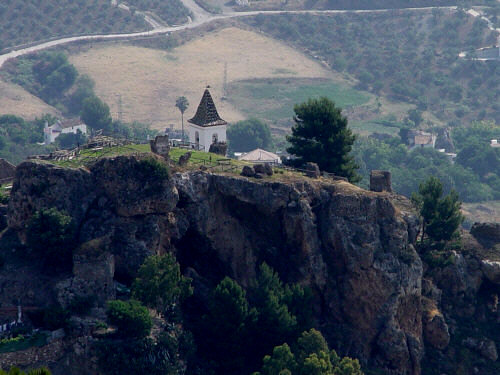
In the castle grounds there is now an
interpretation centre, which has a scale
model and various themed panels about life
in al-Ándalus.
Hermitage of Veracruz / Virgen de los
Rondeles
-
UP
The current construction, which has been
restored, dates back to around the middle of
the 18th Century, although it was built on
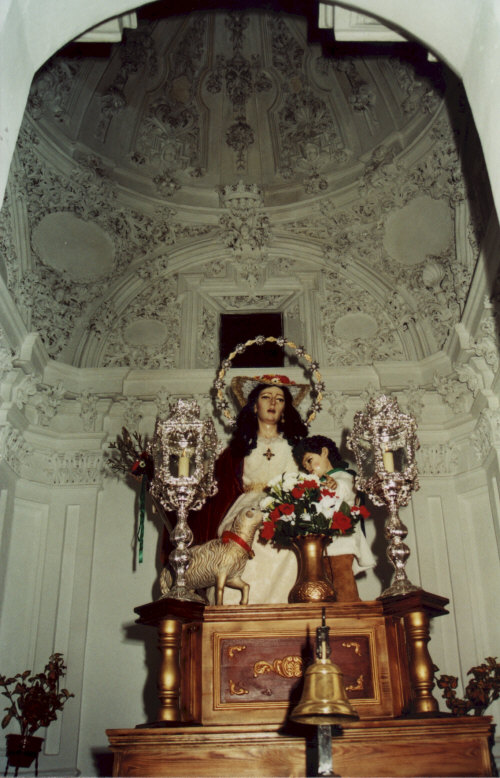
the site of a mosque. It has one nave,
covered by a ceiling of wood and V-beams,
with a semispherical vault free from
decorations and a beautiful, well-conserved
chapel that has a square floor and
semispherical vault on scallops, forming a
rich decoration of plasterwork.
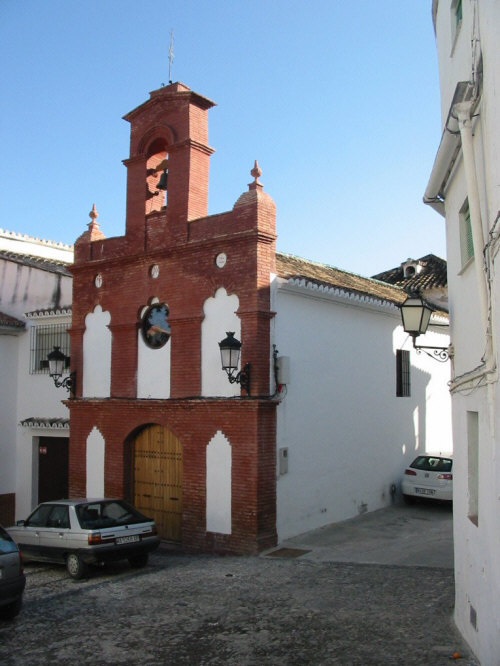
On the outside, the original brick front,
structured in three sections and three
streets, is notable. The present entrance is
through a shouldered arch flanked by blind
arches in the corners; the second section
has three tri-lobed blind arches, and a
belfry at the top with a rounded arch
crowned by a triangular pediment and lateral
ceramic finishes.
The Fiesta of the Virgen de los Rondeles is
celebrated on the 12th of December of each
year and was declared to be a Festival of
National Tourist Interest for Andalusia at
the end of 2001.
On that night, fire takes on a very
important significance, illuminating the
path of a procession whose origins are
rooted in the mists of time.
Since the beginning of the 18th Century, a
group of oil millers have carried their
burning wicker baskets (the “rondeles”) in
procession during this festival, in a simple
act of thanksgiving to the Divine
Shepherdess, another name for the Virgin
Mary.
The events begin with the blessing of the
fire that will be used to light the oil
covered baskets. This is when numerous
groups of “rondeleros” begin a walk that
goes from the Veracruz Chapel up to the
Parish Church of Santiago Apostol.
The light produced by the burning baskets
illuminates a path that winds through the
steep, narrow streets, an inheritance from
the Moorish town. The mixture of fire and
smoke, the smell of oil and the sound of the
drums and the Moorish castanets contribute
to create a surreal atmosphere in which the
flames project ghostly shadows on the fronts
of the buildings.
Towards midnight the procession reaches what
was formerly the main mosque. The
“Rondeleros” wait around the entrance to the
temple until the Virgin has been carried in
to the building. A Salve of honour concludes
the religious acts. From the Church, all the
participants head for the Square, and in
these unique surroundings, the religious
acts give way to the entertainment which go
on until early dawn. A hot cup of chocolate
together with slices of bread with garlic
and olive oil (the “toasties”) and above
all, doughnuts, the Moorish product par
excellence, which delight the locals and
visitors alike who, all united around an
enormous bonfire, will share the final
moments of the Fiesta.
The Rondeles Festival is no mere picturesque
phenomenon; it is a very complex social and
cultural event, a unique and unrivalled
experience dominated by the spirit of
fraternity and sincere friendship between
all the inhabitants.
Niches
(“the crosses”)
-
UP
These are small hollows of all different
types and styles, excavated from the wall,
finished with a rounded arch with a wooden
frame and glass protector. In some cases the
support is sculpted from a single block of
stone, embedded in the wall.
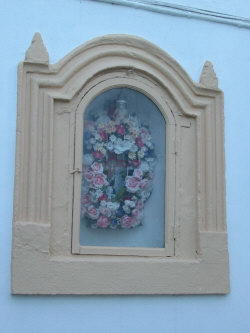
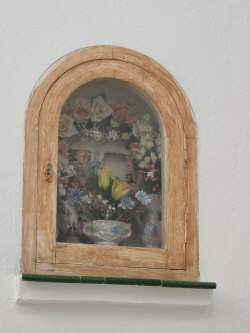
Forty-five have been counted in the historic
centre, dotted about on the façades of the
buildings and in the corners of most of the
main streets. There are many diverse
theories that attempt to explain the origin
and function of these small religious
monuments that take on such special
importance on the Day of the Cross, when
they are decorated especially for this local
celebration.
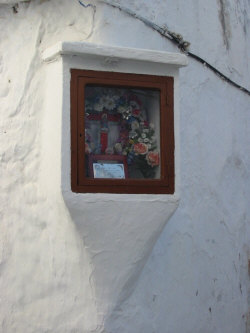
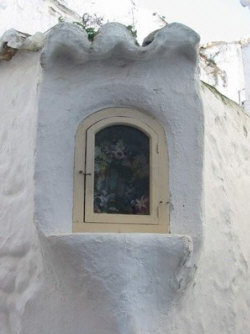
Popular tradition has it that until the
definitive expulsion of the Moorish
residents in 1570, it was a Christian custom
to mark the fronts of the houses with the
Cross of Christ. Other interpretations: the
Moors’ need to demonstrate the sincerity of
their conversion; as a result of the
devotions propagated by the religious
orders; due to the expansion of the practice
of the Via Crucis in 15th Century Europe; as
markers to define the neighbourhood
boundaries, since the neighbourhood lacked
precise boundaries, these may have acted as
a unifying force between the different
neighbourhoods constituted in their
respective areas during the Corpus Christi
festivals.
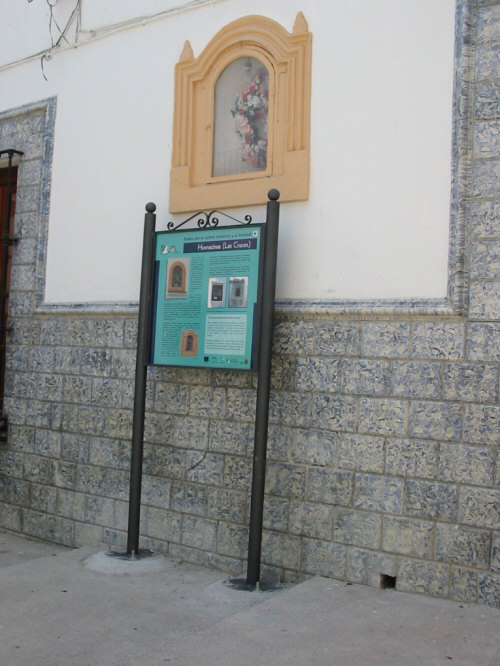
To conclude, we can be sure that the niches
are a representative element of the
religiousness of the people of Andalusia,
defining and personalising the cultural
identity of Casarabonela.
Islamic Garden
-
UP
In the Islamic culture, water is more than
just a resource. It is an element that
contributes to the organisation of society,
daily life, resting places, rules of conduct
and the concept of wellbeing and pleasure of
the senses.
The ritual, sensitive, decorative and
practical nature of water is best
experienced in the gardens, where water,
earth and vegetation do not add to the
architecture but are rather a part of the
construction themselves, which is not
understood without the presence of the
garden.
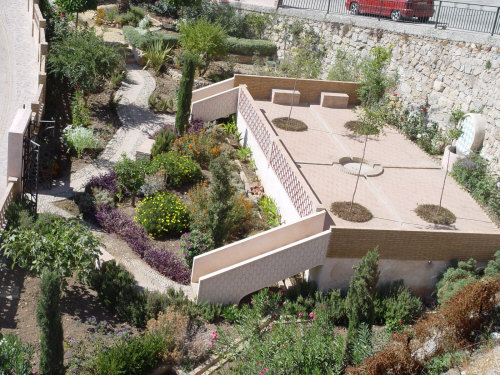
This irrigated space, situated next to the
town centre, constitutes a good example of
the fusion of diverse Eastern elements.
Arabs and Persians united their experience
of the use and control of water in desert
areas with other civilisations’ knowledge of
the management and use of water; and the
Syrians and Berbers that settled in this
land from the 8th Century of our era put
methods passed down from the classical world
into practice which completely changed the
traditional physiognomy of the environment,
transforming the dry fields into areas of
arable land and flower and fruit gardens and
acclimatising previously unknown species
that later spread across the whole of
al-Andalus and North Africa. In this sense,
the Arabs turned things that previous
cultures had regarded as exceptional, into
the normal. The spreading of advance is the
great achievement of this culture.
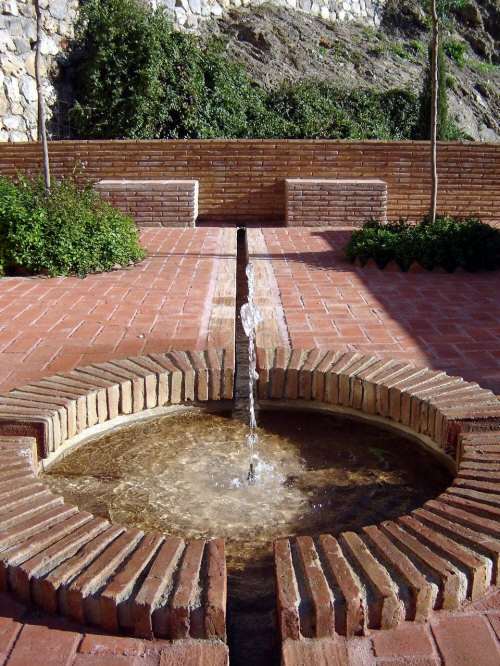
Water adds life and sonority to the mix; the
garden wall – a mixture of Narazid and local
decorative elements – marks the boundaries
of a space with its own personality in which
we can contemplate and experience a large
variety of aromatic and, medicinal plants
and fruit trees, the pomegranate tree being
one of the most notable because it was right
here in Casarabonela that a variety of
pomegranate originating from Syria was
acclimatised in the year 780, a species that
was afterwards known as the “safari
pomegranate” due to the fact that it was one
of the inhabitants by the name of Safar
charged with its acclimatisation in a
farmhouse on his property. From here it went
to Cordoba and spread widely from the city
of the Caliphs where it still grows to this
day.
Museum of
Religious Art
-
UP
In 1936, shortly before the Civil War,
Antonio Ponce Bandera, with the help of
Miguel Vicario Torres, hid the parish
archive and part of the “treasure” in order
to prevent them being destroyed. All the
pieces were returned to the parish in
February, 1937, when Casarabonela ceased to
be under national control, although it
wasn’t until the mid 70s, when Alipo Marrero
Penichet was the parish priest, that the
bases were set for the regrouping of the
pieces. The main problem was that the place
were they were being kept was not suitable
for receiving visitors, and was being used
as a simple store room. In 2000, the
Casarabonela Town Council made a decision
and undertook a restoration of what was
inaugurated as the Museum in December 2003.
It was the result of a collaboration
agreement between the Casarabonela Town
Council and the Bishopric of Malaga and its
installations house an extremely important
collection of silverware spanning from the
17th Century to the current period.
The pieces that form part of this museum are
a very representative example of the variety
as well as the quality that have been
achieved in Spain in terms of religious art.
The museum is structured in the following
manner:
Entrance Hall
Painting: Prints, material (canvas and
serge) glass, etc. Religious items from
the 18th Century to the present day.
Main piece: Painting on glass
representing “Joseph being sold”, 18th
Century.
Main room
Silverware. Display cases along the
left-hand wall and at the end. From the
17th Century. Main pieces: Monstrance in
gilded silver, made in Mexico, 18th
Century; Parish cross in white silver,
1640; Viaticum case in white silver with
the figure of a pelican, 1862; Crown of
thorns in white silver, 1847.
Polychrome sculptures. Separate display
cases. From the 17th Century. Main
pieces: Baby Jesus from the school of
Martínez Montañés, 17th Century, Virgin
of the Sorrows, 17th Century.
Embroidery. Separate display cases. From
the 15th Century. Main pieces: Crimson
ecclesiastical garments, embroidered in
gold thread, donated by the Catholic
Kings, 15th Century; Mystical Lamb,
embroidered in gold thread, early 20th
Century.
Books. Central display case. From the
17th Century.
Museum of cacti and succulent plants
-
UP
This museum houses a magnificent
collection of samples from all
over the world and it is a
national and international
reference for the study and
cultivation of this type of
plant.
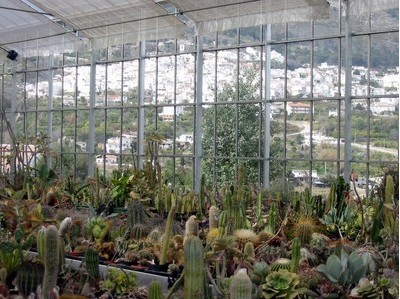
A project to build a new
car-park, a greenhouse with the
latest technology for the
control of temperature and
humidity, a reception area and
shop, a library and a conference
room are currently in the final
stages.
Water
spouts and Fountains
-
UP
One of the things that identify Casarabonela
is the presence of water. The abundance of
water allows irrigated cultivation, powered
the flour mills, even provided energy for a
small power station and of course, quenched
the thirst of the inhabitants and visitors
that passed through the land. Two of the
many references that have been made in this
respect are from the writer Vicente Espinel,
from Ronda, and the Marquis Astolphe
Custine. Worthy of mention is the quality of
the water.
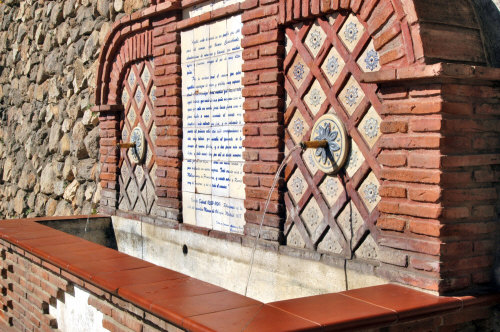
These water features have now been restored
in their original locations and have been
adorned with pictures, made from tiles
painted at a local ceramic artist workshop,
representing various aspects related to the
history and its uses, local traditions and
customs – the Reconquest, the Arabic
presence, the agricultural chores and places
of natural interest.
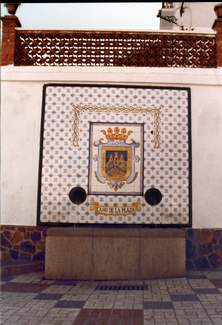
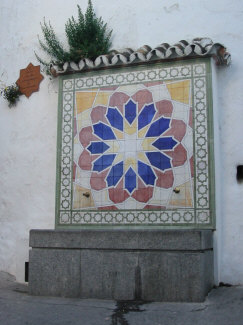
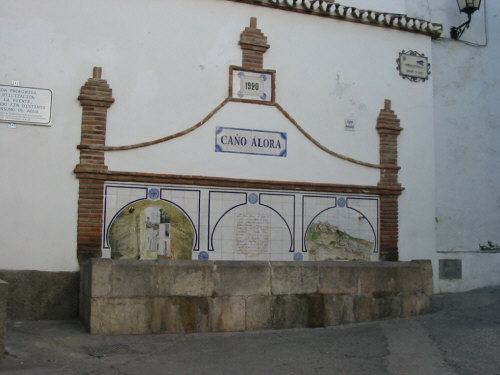
Due to the number of water
spouts and fountains that exist
in the village, they should be
given the importance they
deserve and mentioned one by
one.
Buenavista Square. Viewpoint
-
UP
This monument is the fruit of
the Christian urban concept of
the Renaissance applied to an
Islamic town. In the 19th
Century it was named the “Stone
Benches of the Prison”, and even
today it is still often referred
to as “Stone Bench Square”.
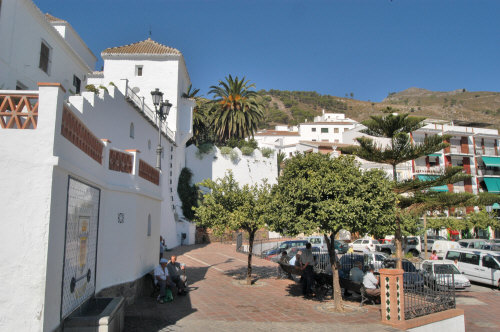
It is an almost perfect square
in shape, decorated with
flooring combined with clay
flagstones and white pebbles and
situated between two buildings;
the Town Hall and a restaurant.
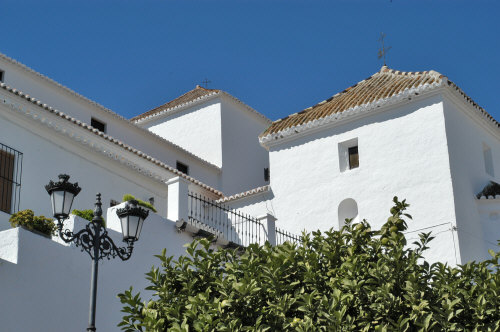
What stands out the most is the
front part of this square with
railings in the form of a
balcony, from where one can
enjoy wonderful views, which are
best seen with ones own eyes
since a mere description would
leave out too many important
details.
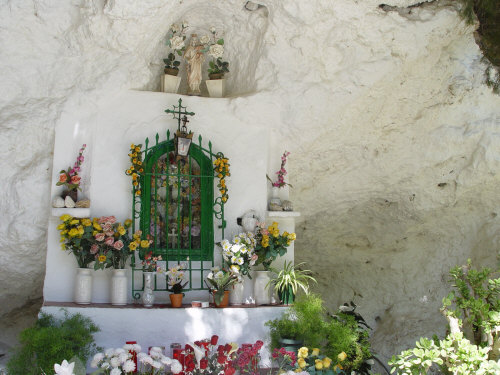
Fuensanta Cross
-
UP
This cross, situated in a hollow
cut into the living rock, shares
the same purpose as others
existing in various points close
to the village: that of the
viewpoint, the Slope of Buifaran
and the small hermitage of the
Calvary. They are small oratory
chapels that have a ritual
function and that possibly, in
some cases, indicate the
separation between two separate
territories – one familiar,
identifiable with the community
environment and the other
unknown, acting as border
markers next to the main roads
of communication between
Casarabonela and neighbouring
villages, the custom being to
make the sign of the cross when
passing them.
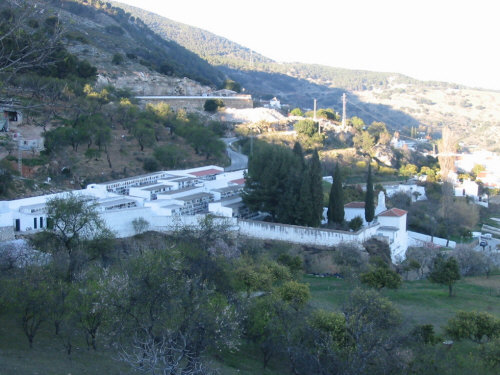
Town Cemetery
-
UP
This cemetery was inaugurated in
1860, on land that belonged to
the Church until 1820. The
deceased had previously been
placed in crypts inside the
parish church, or in a cemetery
and charnel house adjacent to
this, where the restored garden
is today.
It was at the end of the 18th
Century, during the reign of
Charles III, that specific rules
were dictated (Law I, Title III
of the most recent code,
promulgated by Royal Warrant of
the 3rd of April, 1787) that
prohibited this type of burial
within the churches and ordered
the transfer of the cemeteries
to well-ventilated areas built
outside the towns, in part due
to the risk of infection of the
numerous epidemics (plague,
typhus, cholera) that devastated
the country periodically. Only
Bishops, the Royal Family, nuns
and closed order members and
those that had their own family
vaults were excluded from this
general obligation to be buried
in the new cemeteries.
Despite the order, the
construction of the new
cemeteries took a while to
become generalised, and they
were not built until the 19th
Century. One of the problems was
the change of jurisdiction from
the Church to the towns. Until
1833 it was not established that
the new cemeteries had to be
built using the town funds,
although the Church would be in
charge of their upkeep.
The original floor might have
been square or rectangular but
it is likely that many
extensions have been made over
the years. There was a
monumental access gate with a
rounded arch and a belfry
serving as a bell-tower, and at
the sides of the entrance the
cemetery guard’s quarters –
presently used for storage – and
chapel. The whole complex is
completely closed off and the
old charnel house can be found
in a corner at the end.
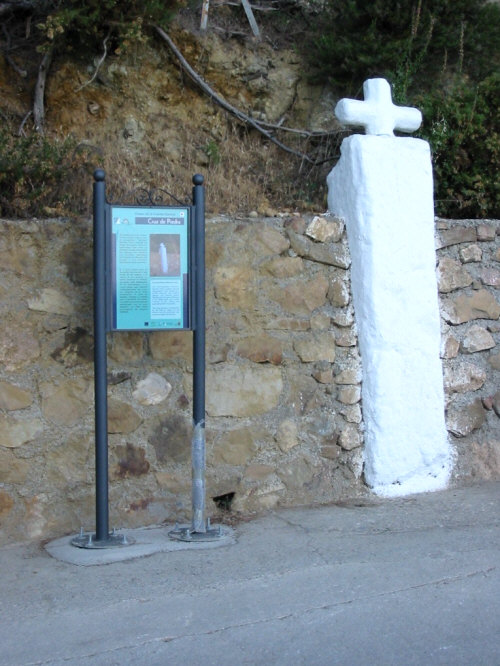
Stone
cross
-
UP
The white-washed cross is situated next to a
path that runs around the edge of the
mountain range and, according to
anthropologist Francisco Sánchez Pérez,
author of “The liturgy of space”, serves as
a means of separating two very different
spaces, one familiar, identifiable with the
area of the village, and the other unknown,
identifiable with the rural area.
The urban area was the women’s
domain and the countryside the
men’s. The mountain range was an
appropriate place for men to
confirm their masculinity, or a
ideal environment for those
types of behaviour that are on
the fringes of established
morality; the cultivated area,
as long as this does not verge
on that of the mountain range,
is taken to be an area
identifiable with the female
sex, in some ways an extension
of the living space.
Hermitage of the Santo Cristo del Calvario
(Holy Christ of the Calvary)
-
UP
The devotion of the Via Crucis
spread right through Europe
during the 15th Century,
coinciding in Spain with the
arrival of the Order of Minims
in the 15th Century. This
religious practice almost always
ended, after passing through the
streets of the town or village,
in a Calvary on the outskirts.
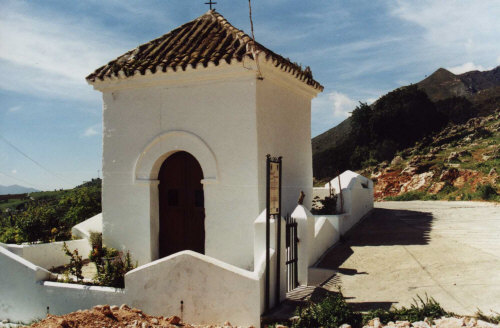
This former hermitage, possibly
from the 17th Century, has a
square floor, a hipped roof
finished with an iron cross and
exterior fence with a gate that
runs round the whole perimeter.
The interior, presided over by a
simple altar covered in small
religious objects, pictures,
flowers and veils, can be
glimpsed through the barred
shutters of the entrance door.
Raja Vieja
-
UP
In Los Moriscos, Carlos, this
colossal crag that sticks up
like a prehistoric tooth is
known by the name Raja Vieja
(the Old Gash). The Gash looks
like a powerful jawbone with the
facade bearing a resemblance to
a mythological owl, with two
large cavities in the rock that
look like surprised eyes, and a
vertical gash, ancient in time,
that forms the beak, elongated
and twisted.
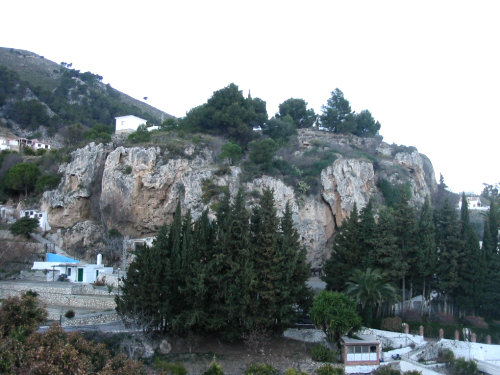
The rear side offers the image,
in perfect profile, of Wagner,
musician in mineral, stony and
arrogant, with his forehead
crowned with the laurel wreath
of success made from the from
pita plants growing at the top
of the crag.
The unrivalled spectacle of the
Old Gash is impressive but, when
seen against the backdrop of a
sky ravaged by an electric
storm, is truly majestic.
Francisco Castellano Fernández
in his book Tales of the Moors
Quebrá Fountain
-
UP
In Casarabonela there is a unique natural
phenomenon known as the “Fuente Quebrá” (the
Broken Spring) which appears each year
during the autumn months or whenever the
rains allow, near the spot known as El
Alcorcal, next to the foot of the Sierra de
la Cruz Alta and Comparate.
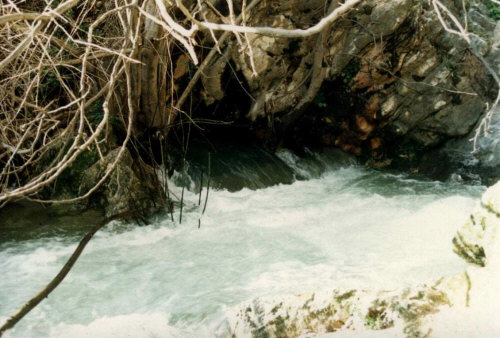
Due to the karstic nature of the
land, the rainwater filters
slowly, silting the underground
cavities. When the rainfall is
heavy and occurs over a short
period of time, the water starts
to leak out through a small
opening at ground level. This
flow of water and its duration
is a sure sign that the mountain
range has been replenished with
water, necessary for the rest of
the year.
Meadow Walk
-
UP
This cobbled path was possibly a
branch of the Roman road that
passed through the Puerto
Martinez mountain pass to join
Casarabonela (Castra Vinaria?)
with the road that runs from
Iluro, passing through Ardales
and El Burgo to connect with
Arunda (Ronda) and Acinipo
(Ronda la Vieja).
It zigzags due to the steep
slope that it has to negotiate
and its present appearance is
the result of work carried out
in the second half of the 18th
Century, during the reign of
Carlos III.
According to Carlos Gozalbes
Cravioto in his study of “The
Roman Roads of Malaga”, this
road formed part of a secondary
road that united the road
connecting Churriana with the
towns of Cártama and Iluro with
Ardales; the latter was situated
on another road linking El Burgo
with Arunda and Acinipo. The
Casarabonela road would have
begun at the confluence of the
Casarabonela river with the
Guadalhorce, following alongside
the Casarabonela river and
linking in part with Arroyo del
Tesorillo, abandoning the low
land at this point and beginning
its ascent, joining the present
motorway (MA-403) until reaching
Casarabonela via the MA-404. A
path begins in the lowest part
of the town that probably
coincides with the Roman path,
at least for the first few
kilometres, although it would
have left this original Roman
path shortly after to turn up
towards the North-East,
continuing on to the Puerto
Martinez through the Camino de
la Dehesa.
Avenida Juan XXIII Chimney-Tower
-
UP
In 1901, Casarabonela had a
small hydraulic water pump
belonging to businessmen Beneyto
and Peris who produced and
distributed energy until 1910,
when this was passed on to
Taillefer.
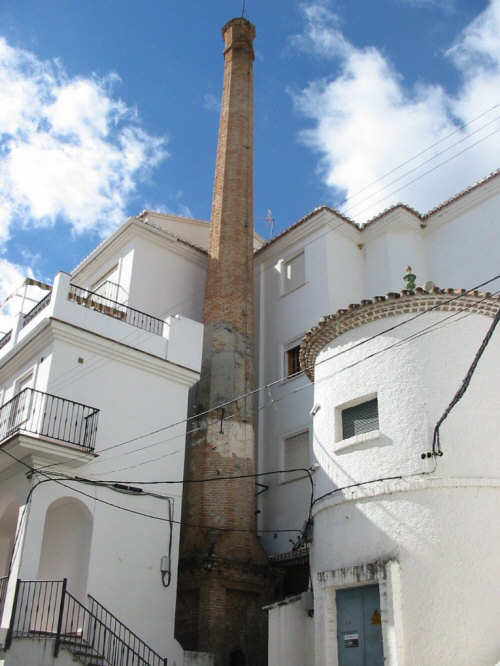
This chimney-tower, of great historical
value, was built at the end of the 19th
Century and formed part of a mixed
production central power station that
supplied the village using hydroelectric and
thermal energy, an indispensable complement
in an area characterised by serious
droughts, until 1901. The hydroelectric
energy came from a turbine powered by a
waterfall (La Chorrera) and the thermal
energy was produced using dynamos and a
steam-driven engine that was later replaced
by a diesel engine.
Cave
Houses
-
UP
These are inhabited caves with rooms for
living and installations for livestock. The
one situated in Cueva Bermeja in inhabited
all year round.
Roman Bridge
-
UP
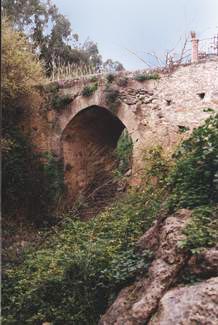
This bridge of Roman origin with a pointed
arch dates back to medieval times and has
undergone at least two reconstructions.
Arch of the Fountain of Christ
-
UP
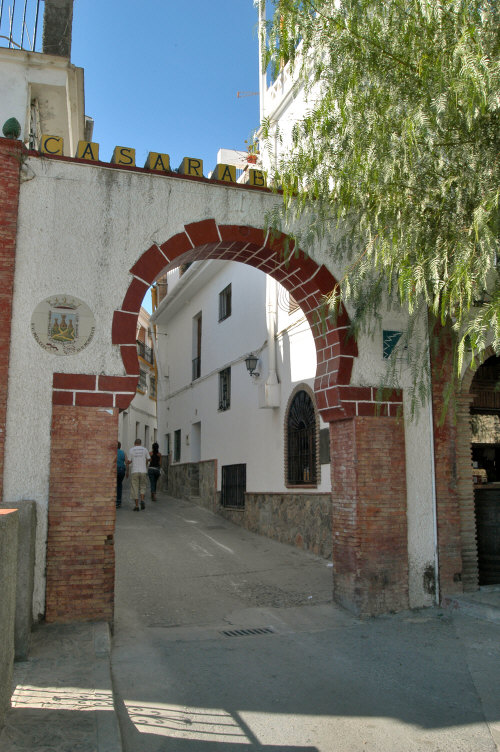
This is a red-brick arch, on the
upper part of which appears the
name of the village. It was
built after the Civil War and is
popularly known as the Arco de
la Fuente del Piojo, “Arch of
the Fountain of Lice”.
 |